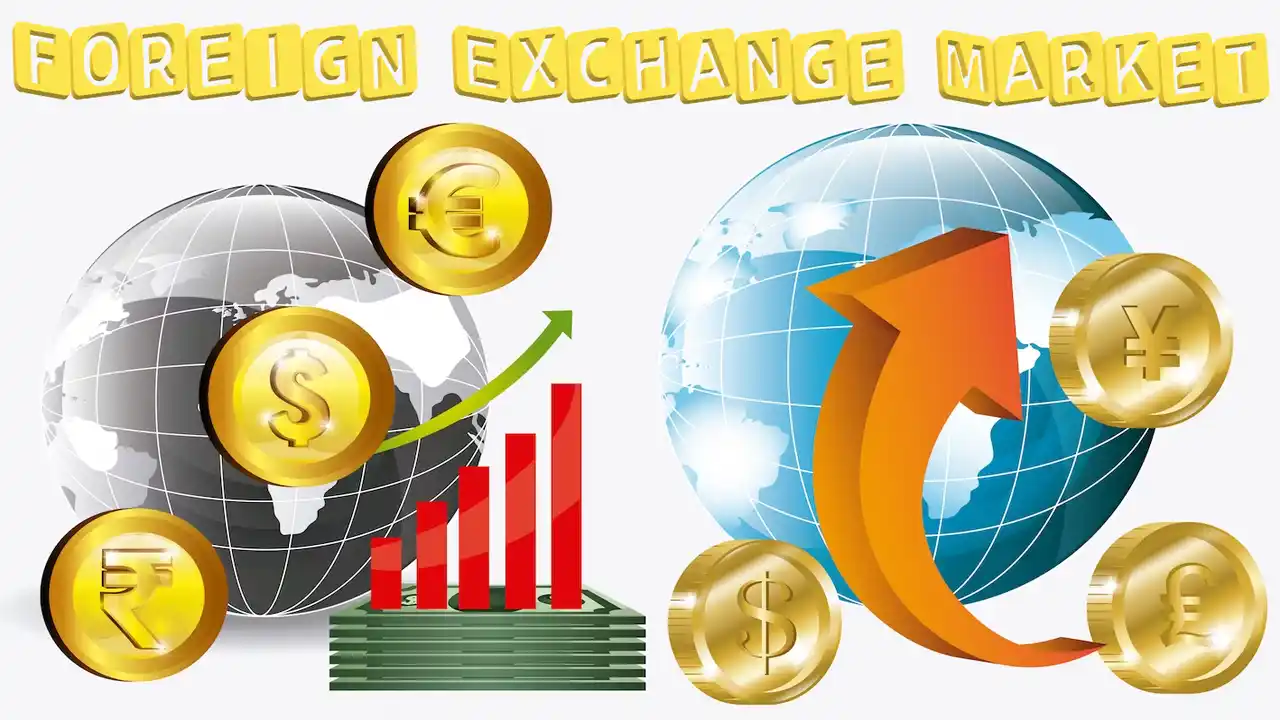
There are no government taxes or charges involved in the foreign exchange market, making it unique among financial exchanges. This results in keeping operating expenses to a minimum. With a relatively modest initial investment, you can start foreign exchange trading. The large number of participants contributes to the market’s high liquidity. This reduces the opportunities for market manipulation and pricing disparities. Not only is it the largest market, but it also has one of the widest selections of goods available anywhere. Also, trading sets, trading strategies, and analytical tools are all available. To learn more, take a look at these features of foreign exchange market.
Moreover, most readily available cash can be found in the banking sector. Currency pairs are the most common unit of trade on the forex market. One currency’s value is always relative to the other currency’s value inside a given pair. The international market consists of two categories: the “interbank market” and the “over-the-counter market.” For a comprehensive guide to functions of foreign exchange market, check out this post from our website.
Features of Foreign Exchange Market
Market participants in the foreign exchange space include banks, corporations, central banks, asset allocators, investment managers, hedge funds, retail traders, and individual investors. More information regarding the ‘Foreign Exchange Market’ will be provided in the subsequent section of this research. On the other hand, the term “Forex market” appears frequently in the media and in common use. It reminds me of venerable skyscrapers in financial districts like Canary Wharf and Wall Street. However, this is not at all how the forex market functions. There are a lot of ways in which this market differs from others, and familiarizing oneself with these differences is the first step toward mastery. Continue reading to become an expert on features of foreign exchange market and learn everything you should know about it.
The Online Market
As its name implies, the foreign currency market operates “over the counter.” This is because there is nowhere convenient for people to gather for commercial purposes. This means that there is no central location for the forex market. Banks, brokers, and dealers operate a global decentralized electronic trading platform called the Foreign Exchange Market (Forex) for buying and selling various foreign currencies.
Less Expensive to Trade
Trading on the foreign exchange market has low transaction costs. There are no commissions to pay when trading in these markets, unlike other sorts of investing. The sole expense associated with trading in the foreign exchange market is the spread between buying and selling a currency. There is no risk involved for small buyers, making trading a fantastic opportunity for them to make a profit. Due to little overhead, this is feasible.
Changes in the Ability to Buy
To facilitate the exchange of one currency for another denominated in a different currency is the primary function of the foreign exchange market. To accomplish this, a currency exchange is made. A businessman in India may sell software to a firm in the United States in exchange for funds, while a corporation in the United States could donate a supercomputer to an Indian company. Each country’s business would prefer to be paid in its own currency for these types of deals. One common example is the preference of American businesses to settle payments in dollars over the preferred currency of Indian businesses, the rupee.
Spreading Across the Map
Unlike similar markets, the foreign currency market stands out for its lack of confinement to any particular country or region. London, New York, Amsterdam, Tokyo, Hong Kong, Toronto, and other major financial hubs all have their own versions of the market.
Dynamic Market
The exchange rate between two currencies is volatile. Currency exchange rates fluctuate often in numerous global markets. Calculating fluctuations in exchange rates requires keeping in mind the ever-shifting relationship between supply and demand. So, the rapid pace of change in this market has given rise to the myth that it is the “perfect market to trade in.”
High Liquidity
When compared to other global financial markets, the market for exchanging currencies is by far the busiest. Trading currencies involves making purchases and sales across international borders. Any participant in this market may make a currency purchase or sale at any time. They are welcome to engage in currency exchange with one another, and this will not affect the current exchange rates. Since the value of currency does not fluctuate between the time an order is placed and the time it is executed, you will receive the agreed upon rate.
The Dollar is Traded the most
The US dollar is the dominant currency in international financial markets and serves as a benchmark for other currencies. It is widely used in daily transactions along with another commonly traded currency.
Works Around the Clock
The forex markets operate 24/7, allowing for trading at any time on a dedicated website. It provides flexibility and convenience, unlike other markets like stocks and bonds, which have limited trading hours. There is always a global market for buying or selling foreign currency, even during nighttime in one country, there may be buyers in another. Sunday is particularly favorable for selling currency due to the work schedule in the Middle East. Overall, forex markets offer exceptional convenience and adaptability.
Minimizing Risks
Those who buy and export across borders may be able to hedge against trade risks by trading on the foreign exchange market. This is possible because of a service known as “Hedging.” As a result, traders all across the world can conduct business as usual without having to worry about whether or not they will earn a profit. This is due to the recent volatility of exchange rates.
Volume
About 95% of trading activities in the foreign currency market involve buying and selling assets across international borders, making it stand out from other markets. Foreign exchange is another term for this phenomenon. Exports and imports account for only roughly 5% of the total.
Intermediary
However, the foreign exchange market makes it simple for people to convert their hard-earned dollars into local currencies. To accomplish this, the market facilitates transactions between buyers and sellers of foreign currency.
Giving out Credit
Loans are made using specialized financial products traded on the foreign currency market. Among these monetary instruments are bankers’ acceptances and letters of credit. Moreover, this type of loan is quite helpful for international businesses and traders.
Market Openness
Those dealing in foreign currency have access to an abundance of market information and data. They can monitor the instantaneous fluctuations in the value of a number of different currencies without the assistance of a broker by employing real-time stock and account tracking. Also, better trading decisions and more command over your finances are possible with access to this much data.
FAQ
Who Runs the Market for Foreign Exchange?
There is no central clearinghouse for foreign exchange transactions. Every buyer has the option of trading on whichever market they like. Typically, they have the option of trading on a market regulated by the Commodity Futures Trading Commission (CFTC), a market regulated by the Securities and Exchange Commission (SEC), or a “off-exchange market” managed by a market maker (such as a broker or dealer).
How do Newbies Learn to Trade Forex?
The first step is to educate yourself about the market. Learn some basic phrases and get a feel for how things function. Learn the ins and outs of your currency and formulate a strategy for your transaction. So, you should enroll in credible forex trading classes offered by established organizations.
Why is Foreign Exchange Market Unique?
The foreign exchange market is unique among financial exchanges in that it is always active, has a high volume of trades, and attracts participants from all over the world. Leverage is used to boost profit margins in this business. There is no such thing as a “set exchange rate” on the foreign exchange market. Instead, fluctuations in the exchange rate are seen. Reason being: floating exchange rates are more efficient.
Final Words
As a result, the Forex market has a few distinguishing characteristics. These are essential for forming an initial picture of a site of this magnitude. As we progress through this session, you’ll find that each of these characteristics has significant bearing on the nature and success of transactions. We’re going to take a look at the features of foreign exchange market and discuss related matters in this topic.