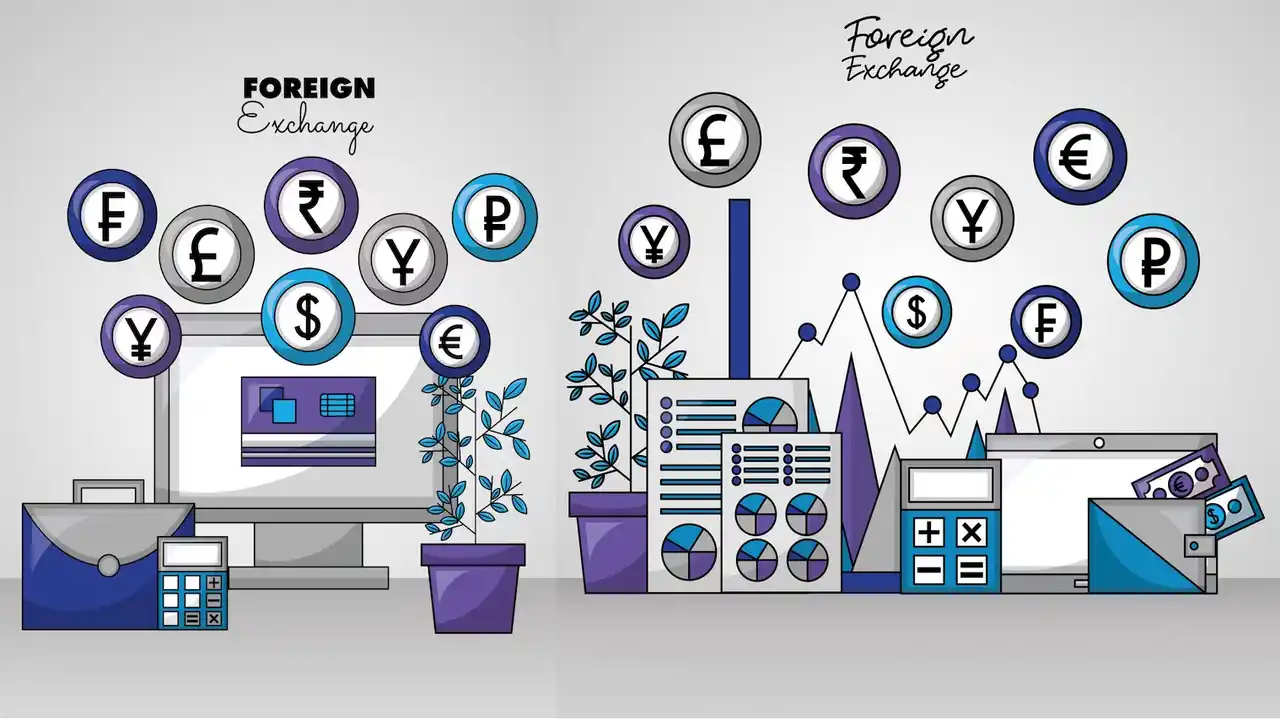
Foreign exchange markets play a crucial role in legitimizing international trade and investment. (The mechanics of establishing credit). Possessing the means to move money and make purchases across international borders. Foreign bills and telegraphic transfers can help you get there. (Capability Transfer). The same as facilitating the purchase and sale of spot or forward foreign exchange, hedging services require careful planning. (The Function and Purpose of Hedging). To learn more, take a look at these functions of foreign exchange market.
The Foreign Exchange Market is a place where people purchase and sell different currencies from other countries. A foreign exchange market is a marketplace where traders actively trade different national currencies.
Functions of Foreign Exchange Market
The term “foreign exchange” refers to the buying and selling of one country’s currency for another. The government owns foreign currency, securities, and bonds issued by foreign firms and governments. The term “foreign exchange rate” commonly refers to the rate at which one currency exchanges for another. It represents the amount of one’s own currency required to exchange for a specific amount of a foreign currency. For instance, if one dollar costs sixty rupees, the exchange rate would be $1:60. Check out these functions of foreign exchange market to broaden your horizons.
Changes in Money
To some extent, this may be the single most significant function of the foreign exchange market. It facilitates the exchange of one country’s currency for that of another. This is helpful when communicating with foreign business partners. Businesses and individuals alike will require access to foreign currency in order to pay their overseas vendors. Companies will need to obtain foreign currency in order to pay their international suppliers. The Mexican peso is the currency used for purchasing food and other necessities while traveling in Mexico. The foreign exchange market makes this possible.
Reduce Foreign Exchange Risk
Eliminating exposure to fluctuations in exchange rates is another crucial aspect of the global currency market. Some countries have problems with their economy, government, and society, which puts their currency value at risk. In the foreign exchange market, participants engage in forward exchanges, where they agree upon the current exchange rate for a specified future date. This helps investors avoid losses.
Chances to Invest and Make Money
The foreign exchange market is a fantastic area to make and spend money, and it also provides investors with a fantastic opportunity to expand their global holdings. You have to wager against another coin to win. The best thing is that any profits you make by investing and selling are tax-free.
What Hedging does
As a third function, the forex market mitigates the potential downsides to trading in foreign currency. Participants in a free exchange market can mitigate foreign exchange risk by employing a strategy known as hedging. Fluctuations in the exchange rate, which represents the price of one currency in terms of another, can result in gains or losses for any participant. Significant exchange risk is incurred when there is a large number of net claims or net liabilities that need to be settled in a foreign currency.
To minimize exchange risk, investors can use forward contracts in the currency exchange market. These contracts involve buying or selling a specific amount of one currency for another at a predetermined future date and price. Typically lasting three months, forward contracts are not affected by the current exchange rate. Another way to hedge foreign exchange risk is by utilizing the future market.
The forex market helps mitigate uncertainties in currency trading by offering forward contracts. These contracts allow traders to hedge against potential gains or losses caused by exchange rate fluctuations. In a forward contract, parties agree to buy or sell currencies at a predetermined rate in the future, usually for a three-month duration. This eliminates the need for immediate money exchange.
The foreign exchange market provides safety from exchange rate risks by offering forward contracts. These contracts help hedge against financial losses or gains due to fluctuations in exchange rates. A forward contract involves buying or selling foreign currency at a predetermined price for a future date, usually lasting around twelve weeks. It is important to note that this contractual process does not involve immediate monetary transactions.
What Credit is Used for
The foreign exchange market also facilitates the granting of loans domestically and internationally. Companies in both countries benefit from this. When individuals make purchases overseas using foreign bills of exchange, it becomes evident that a credit period of approximately three months is necessary until the bills mature.
Foreign Exchange (FOREX) provides short-term loans to importers to ensure the smooth flow of products and services across international borders. An importer can purchase goods from overseas with the use of credit. A three-month bill of exchange on the foreign exchange market would allow an Indian firm to purchase machinery from the United States.
Short-term credit, such as that provided by FOREX, is a useful tool for facilitating the import and export of products and services. One option for an importer is to use credit while making purchases overseas. A corporation in India might use the foreign currency market to issue a bill of exchange with a maturity of three months in order to finance the purchase of machinery in the United States. The equipment can be paid for in installments, which is convenient for the business.
International and domestic trade rely heavily on the availability of credit. In the Foreign Exchange Market, the Credit Function involves supplying credit in the form of foreign exchange to facilitate the export and import of goods and services. Bills of exchange are commonly utilized in this scenario for making international payments. The standard validity period for bills of exchange is three months.
The Purpose of Transfer
Currency conversion, or the transfer of purchasing power between countries, is the primary function of the foreign exchange market. The foreign currency market performs the transfer function by simultaneously bidirectionally clearing debts using a variety of credit instruments such as telegraphic transfers, bank drafts, and foreign bills.
The primary function of the foreign exchange market is to facilitate the transfer of funds (in a foreign currency) from one country to another for the purpose of paying bills and other expenses. Exchange rates between different currencies are the main focus. The job of FOREX is to transmit buying power from one country to another.
FOREX facilitates the exchange of rupees for dollars when an Indian exporter acquires goods from the United States with the purchase price denominated in dollars. Payments are made through various forms of credit, including bank drafts, foreign exchange bills, and phone transfers.
In order to settle payments between countries, money (foreign currency) flows through the foreign exchange market. A currency swap involves the trading of one currency for another. Moving purchasing power from one country to another is the goal of foreign exchange, or FOREX.
The foreign exchange market’s main function is this very thing. It enables transactions involving the transfer of purchasing power between countries using different currencies. The buying power of a currency measures how much a given amount of money can purchase. For this purpose, participants in the forex market utilize credit methods such as bills of exchange, bank drafts, and telephone transfers. Because of this, countries need to trade money or foreign currencies with one another to pay their debts.
FAQ
What is the World’s Biggest Foreign Exchange Market?
The United Kingdom, and more specifically the city of London, is the global financial hub. In April of 2022, the UK accounted for 38.1% of all trading. As a result, it became the world’s preeminent hub for the trading of foreign currencies.
How are Rules Set up for the Forex Market?
No central authority is always on duty to oversee the foreign exchange (FX) market, which leads to limited regulation despite its massive size. Instead, various national trading agencies monitor forex providers worldwide to ensure compliance with industry standards. In Australia, for instance, ASIC (Australian Securities and Investments Commission) is the governing body.
How do People Make Money on the Foreign Exchange Markets?
When you trade money, you take advantage of fluctuations in the value of other currencies. Money is traded between different pairs of currencies. Active traders can make a lot of money in the currency market because of the high leverage, diverse market options, and low transaction costs.
Final Words
The Foreign Exchange Market is operated with the help of Foreign Bills of Exchange, Telegraphic Transfers, Bank Drafts, Letters of Credit, and other Significant Foreign Exchange Instruments. Foreign exchange market stability is critical to global economic growth and international trade. Facilitating currency deals, providing economic opportunities, and mitigating currency risk are the primary functions of a foreign exchange market. Check out these functions of foreign exchange market to enhance your knowledge. To learn more about the features of foreign exchange market, read this article.