Foreign exchange has been discussed thus far in the context of the actual economy. Speculative trading in foreign exchange is also possible. People in this country trade money based on their predictions about its future value. Currency pairs are a major source of speculation due to the importance of the relationship between their respective values. Buyers are more likely to invest in a currency if they anticipate an increase in its value. The currency’s value will increase as a result of these acquisitions. Read on to learn more about importance of foreign exchange market and become the subject matter expert on it.
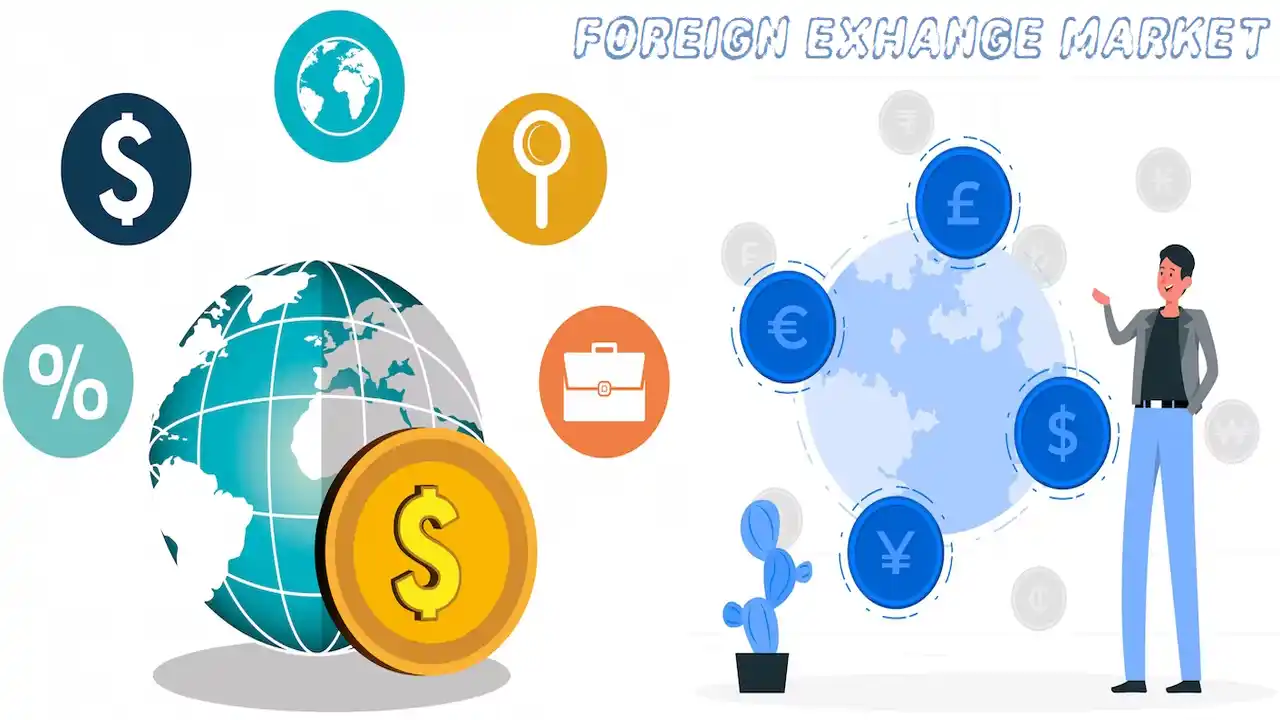
The term “foreign exchange market” refers to the marketplaces where various currencies are traded. In truth, currency exchange transactions occur often. The foreign exchange market is the largest and most liquid financial market in the world. Each day, transactions of several trillion dollars take place. The foreign exchange market is the busiest financial market in the world. Participants in this industry come from a wide range of companies. The government, commercial banks, or central banks could be at fault. Participants could range from individual savers to large financial institutions to foreign exchange (FX) brokers and beyond.
Importance of Foreign Exchange Market
The foreign exchange market is widely regarded as one of the most pivotal in the entire financial system. As a result, prices may shift in various nations, which could have an impact on international trade. It affects the cost of importing goods and, by extension, the general cost of living and inflation rate in a country. Fluctuations in exchange rates pose a significant threat to businesses and impact foreign investment and finance decisions. This research will examine the reasons behind these fluctuations and the measures that businesses can take to lessen the associated risks. To learn more, take a look at these importance of foreign exchange market.
Financial Tool Settlements
Checks, demand drafts, letters of credit, and international wire transfers are common methods of transferring funds internationally. The exchange rate on the foreign currency exchange market ultimately determines the amount credited to the recipient’s account, despite the complexity of the transaction, which may involve more than two banks.
When one country loans another country money for growth, they usually establish credit lines in favor of the participating firms. Even when dealing with such products, the most up-to-date foreign exchange market rates are applied.
The same holds true for a country’s ownership of debt instruments issued by another country, such as the United States’ Treasury notes. It’s also possible that a foreign corporation sold a bond to a domestic or international investor. The foreign exchange market rates at the time of redemption determine the final amount paid in the local currency upon redemption.
Hedging
The shipment could experience delays when an international buyer places an order with an exporter. Therefore, clients initiate a letter of credit to guarantee payment. Typically, an exporter will deliver the items between 30 and 45 days after the deal is signed. The local currency’s value relative to the US dollar may rise or fall in the meanwhile. To rephrase, the seller’s final profit could be more or less than what he anticipated at the time of the final buyer’s bid. An exporter may even incur a loss in the worst-case scenario. By negotiating with the facilitating bank, a seller might “lock in” a specified exchange rate. To “hedge” its bets and safeguard its interests, the bank will exploit the foreign exchange market. An exporter can use this strategy to get out of sticky circumstances.
Investors that purchase high-risk assets in a foreign currency market sometimes use hedging strategies. In times of heightened political tension, investors seek out the relative stability of the Japanese yen and the Swiss franc. Without the foreign exchange market, it would be very impossible to close such a trade quickly.
Trade between Countries
The onus falls on the exporter to convert foreign currency received from buyers into the local currency. Similar to how sellers must accept US dollars as payment, consumers must do the same when transacting with sellers in other countries. If a multinational corporation is planning to expand internationally by establishing a local office, warehouse, or manufacturing facility, it will require US dollars to do so. Currency conversion is required even when two companies merge or make a purchase. The foreign currency market is the sole venue to satisfy such requirements.
Inflation Control
The foreign exchange reserves of countries with stable governments typically include considerable quantities of reserve currencies like the euro, the US dollar, the British pound, the Japanese yen, the Swiss franc, and the Chinese renminbi. These monies are utilized to maintain a steady economic climate. When there are positive economic indicators, the central bank of a country will reduce interest rates. As a result, there will be zero demand for the local currency among overseas buyers. When necessary, central banks will sell the local currency and buy the reserve currency on the foreign exchange market. Because of this, the value of the local currency will not rise any time soon. Exports will be more competitive if the local currency continues to depreciate. More disposable income and more affordable credit rates will also spur consumer spending. Because of this, the economy will expand.
When inflationary pressures become more apparent, the Federal Reserve will increase interest rates. This will increase demand for the local currency among foreign customers. If necessary, the central bank will maintain domestic currency stability by buying domestic currency and selling reserve currency on the foreign exchange market. Businesses and consumers may need to adjust their budgets as a result of reduced cash flow. This will ensure that the company doesn’t become unmanageable. Therefore, central banks can manipulate their currencies on the foreign exchange market to either boost or weaken them, depending on the needs of their respective economies.
There would be no way to determine the relative value of different currencies if there were no foreign exchange market. In its current form, the global economy could not function without the foreign exchange market. Furthermore, it would make it simple for some countries to adjust their currency exchange rates, which would disrupt global trade.
When Going out of the Country
When traveling internationally, it’s helpful to have access to the local currency. You should get some money in the United States if you intend to stay there for any period of time. You’ll need pounds (£) if you plan on spending any time in the UK. Convert the foreign currency you received into Indian Rupees. Financial institutions, tourism companies, and currency exchange bureaus all provide this service to their customers. This is due in part to the existence of exchange rates. Each purchase also incurs a cost from them. One should change money at a bank or through a middleman. If a bank considers you to be a valuable customer, they will reward you with favorable interest rates. Since exchanging money at the airport is the priciest alternative, it should be utilized only if absolutely necessary.
Money cards are another option for tourists. One form of pre-paid card is the foreign exchange card. It’s versatile enough to store a single currency or a handful of others. Carrying cash is not only unsafe, but also inconvenient when compared to this option. Foreign exchange, or Forex, is critical for making international travel arrangements as well as conducting international business.
FAQ
What are the Perks of International Trade for both Sellers and Buyers?
Below are just a few examples of how exports benefit both manufacturers and consumers: It allows companies to expand outside their domestic markets, which are the marketplaces in their own nations. It allowed consumers more options of better products. It aids in each nation’s maximization of its inherent natural resource endowments.
What Effects does Foreign Trade Have?
The general trend of falling consumer goods costs as a result of international commerce is beneficial to the people of countries who do a lot of importing. Potentially larger welfare gains from reduced prices at the point of consumption could outweigh any income-related gains or losses.
What Strategies Avoid Foreign Exchange Risk?
The national currency must be used for all transactions. This is the simplest strategy to lessen the impact of currency fluctuations on your finances. Customers whose home currency is different from yours may pose a threat to your cash flow if they arrange payments in a way that takes advantage of fluctuations in the exchange rate.
Final Words
Changing money should be done at a bank or through a middleman. If a bank considers you to be a valuable customer, they will reward you with favorable interest rates. Tourists should utilize exchanging money at the airport only if absolutely necessary, as it is the priciest alternative. Another option for tourists is money cards. One form of pre-paid card is the foreign exchange card. It’s versatile enough to store a single currency or a handful of others. Carrying cash is not only unsafe, but also inconvenient when compared to this option. We’ll look at the importance of foreign exchange market and talk about the related topics in this area. For an in-depth analysis of the characteristics of foreign exchange market , read more and gain valuable insights from it.